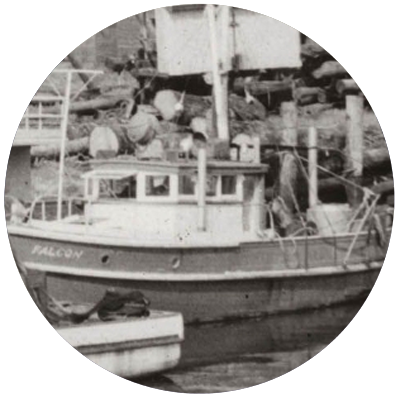
The History of Ballina Fishermen’s
Co-operative: Nurturing a Legacy of Fishing Excellence
Early Roots and Growth of Ballina
Ballina, nestled on the northern shore of the Richmond River, traces its origins back to the 1840s. It stands proudly, 20 kilometers south of Cape Byron, a geographical landmark as Australia’s most easterly point. In 1828, the HMS Rainbow, under the command of Capt. Henry Rous, marked the first maritime entry into the Richmond River, followed by intrepid overland settlers from the Clarence River.
The 1860s witnessed a brief but bustling gold rush when precious metal was discovered in the sands at the river’s mouth. During this time, Ballina emerged as the key port for Casino and Lismore. The region’s agricultural prowess bloomed with 75 sugar mills operating along the fertile banks of the Richmond River by 1875. In 1879, the enduring Ballina lighthouse was erected, standing as a testament to the town’s maritime significance.
The Name “Ballina”
The etymology of the name “Ballina” bears an air of mystery. Many believe it is rooted in the Aboriginal placename “Bullenah,” signifying a place abundant with oysters. The town’s name may have been influenced by its Irish counterpart in Ballina.
Ballina’s Maritime Importance
From the 1860s onwards, businesses began to thrive along Ballina’s riverfront, capitalizing on its strategic position for trade. The northern wharf on North Creek held pivotal importance, serving as a crucial docking point for ships until the late 1890s. A surge in ship traffic eventually led to vessels navigating the main river for docking. The establishment of the break wall marked a shift, rendering the north Norton Street wharf obsolete, though it stood as a testament to a bygone era.
Commercial Evolution and Urban Development
Ballina’s early businesses, predominantly fashioned from weathered boards, included inns, hotels, and general stores, catering to both residents and transient visitors. As commerce burgeoned, establishments migrated from the riverfront to River Street, paving the way for a diverse array of enterprises.
The dawn of the 20th century witnessed a shift towards more substantial brick and masonry buildings. This transformation was spurred by Ballina Municipal Council’s encouragement and was further motivated by significant fires that swept through the main street. The iconic Post Office and Court House were among the first brick structures, leading the charge two decades prior. Meanwhile, on the outskirts of this urban surge, much of Ballina Island retained its pastoral essence, harboring small farms engaged in dairying and mixed farming pursuits.
The Birth of Villages
Cedar and farming settlements provided the foundation for the emergence of villages in the shire. Cedar camps at Emigrant Creek and Uralba laid the groundwork for the growth of Tintenbar and Duck Creek Mountain (now Alstonville). Duck Creek Mountain village, initially perched on Perry’s Hill, later transitioned to its present location in the early 1900s. This shift was spurred by burgeoning business activity along Alstonville’s Main Street, catalyzed by the plateau’s transition into a fertile ground for mixed and dairy farming.
The Pioneering Era of Ballina Fishermen’s Co-Operative
In the aftermath of World War II, the Ballina Fishermen’s Co-Operative was established, taking root on the banks of the Richmond River, at the very heart of the township. The original Co-Op, located in the parking lot of the esteemed RSL Club in River Street, eventually outgrew its space, prompting the construction of a purpose-built facility at the current site, on the corner of Keppel Street and River Street, West Ballina, in 1995.
Ballina Landmarks
The Ballina Fishermen’s Co-Operative stands in close proximity to one of Australia’s most recognizable icons – the “Big Prawn.” This colossal crustacean, designed by South Australian sculptor James Martin, is a towering tribute to the town’s fishing heritage, measuring an impressive 27 meters, weighing 33 tonnes, and dwarfing even the largest humpback whale.
Ballina’s Rich Fishing History
Fishing in Ballina surged with the arrival of settlers in the mid-19th century. Steamships and the advent of ice-making facilities facilitated the transport of catches to Sydney, sparking an era of prosperity that stretched into the 1920s. A subsequent decline in catches during the 1930s and early 1940s was followed by a hiatus due to the Second World War. Post-1945, the government promoted the formation of regional Co-ops and regulated the Sydney Fish Market, leading to the establishment of the Richmond District Fishermen’s Co-op in 1945. The subsequent decades witnessed steady catches, with occasional peaks during the 1950s. Prawn trawling took off in the late 1950s, culminating in an expansive offshore fleet in the 1970s. The Ocean Hauling Fishery, Ocean Trap and Line, and Lobster fisheries continue to thrive, with operations centered around Ballina Fishermen’s Co-operative’s harbor facilities.
In Summary
The Ballina Fishermen’s Co-operative stands as a living testament to a town steeped in maritime tradition and industry. From its early days as a bustling port to its present status as a hub for sustainable fishing practices, the Co-op’s journey mirrors the resilience and adaptability that defines the Ballina community. With each passing year, the legacy of the Co-operative grows, forging a path for future generations of fishermen and preserving the rich maritime heritage of Ballina.